
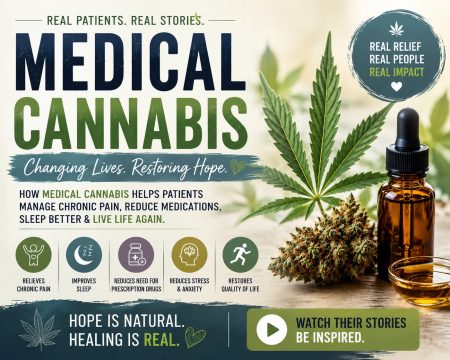
Medical Cannabis: Real Patients. Real Stories.
This entry was posted on July 9, 2026.
Medical Cannabis: Patients Share Their Experiences with Chronic Illness and Pain
Medical cannabis continues to be one of the most discussed alternative therapies for people living with chronic illnesses. While scientific research is still ongoing for many conditions, thousands of patients report that cannabis has significantly improved their quality of life. In this collection of personal testimonies, individuals from different backgrounds explain how medical cannabis has helped them manage pain, reduce their reliance on prescription medications, and regain their independence.
Living with Constant Pain
Many of the patients interviewed suffer from long-term medical conditions, including systemic arthritis, fibromyalgia, osteogenesis imperfecta (brittle bone disease), scoliosis, osteoarthritis, spinal injuries, and chronic back pain. Several also describe living with post-traumatic stress disorder (PTSD) following traumatic events.
For many of them, daily life had become dominated by pain, fatigue, limited mobility, and sleep problems. Some explain that there were days when simply getting out of bed or performing normal activities felt impossible.
Reducing Dependence on Prescription Drugs
A recurring theme throughout the interviews is frustration with conventional pain medications. Several patients describe years of treatment with opioid painkillers, muscle relaxants, sleeping pills, and anti-anxiety medications.
Although these drugs often provided temporary relief, many participants say they experienced significant side effects, including mental fog, drowsiness, nausea, fatigue, and reduced ability to work or enjoy everyday life. Some felt they were taking multiple medications simply to counteract the side effects of other prescriptions.
After beginning medical cannabis therapy, many report that they were able to reduce—or in some cases completely discontinue—their use of pharmaceutical pain medications under medical supervision.
Improved Quality of Life
Rather than describing cannabis as a cure, most participants focus on improvements in daily functioning.
Patients report that medical cannabis helped them:
- Reduce chronic pain.
- Improve sleep quality.
- Relax tight muscles.
- Increase mobility.
- Improve appetite.
- Reduce anxiety.
- Maintain clearer thinking compared with certain prescription medications.
- Return to work and participate in family life.
Several individuals explain that better sleep alone dramatically improved how they felt during the following day.
Finding the Right Treatment
Patients also describe learning that different cannabis products can produce different effects. Some prefer edible products before bedtime because they provide longer-lasting relief during the night. Others choose vaporized or inhaled cannabis for faster symptom control during the day. Some mention selecting products that contain higher levels of CBD when they want pain relief without feeling mentally impaired.
According to these personal experiences, finding the right product often required experimentation under medical guidance.
Access to Medical Cannabis
Several interviewees discuss the importance of having legal access to medical cannabis. They explain that obtaining a medical cannabis card allowed them to purchase products from licensed dispensaries, grow cannabis for personal medical use where permitted, or receive assistance from caregivers.
Some also describe how professional dispensaries made them feel safe and comfortable, contrasting those experiences with places they felt appeared unregulated or intimidating.
Recovering Independence
One of the strongest messages throughout the interviews is the desire to regain control over life.
Patients explain that reducing pain allowed them to continue running businesses, caring for family members, spending time with grandchildren, returning to work, and participating more actively in their communities. For them, symptom management was about much more than pain relief—it meant recovering a sense of independence and dignity.
Personal Experiences, Not Universal Results
The individuals featured in these interviews emphasize that their experiences are personal. While many describe substantial improvements after using medical cannabis, responses can vary from person to person depending on the condition being treated, the type of cannabis product used, dosage, and individual biology.
Medical cannabis is increasingly being studied for chronic pain and other medical conditions, but patients should always discuss treatment options with qualified healthcare professionals and follow the medical regulations that apply in their country.
Conclusion
The stories presented in these interviews illustrate why many patients advocate for greater access to medical cannabis. Although it is not portrayed as a universal solution, many participants believe it has provided symptom relief where conventional treatments were either ineffective or caused unacceptable side effects.
For these individuals, medical cannabis represents more than a medication—it has become an important tool for improving daily life, restoring independence, and helping them manage chronic medical conditions more effectively.